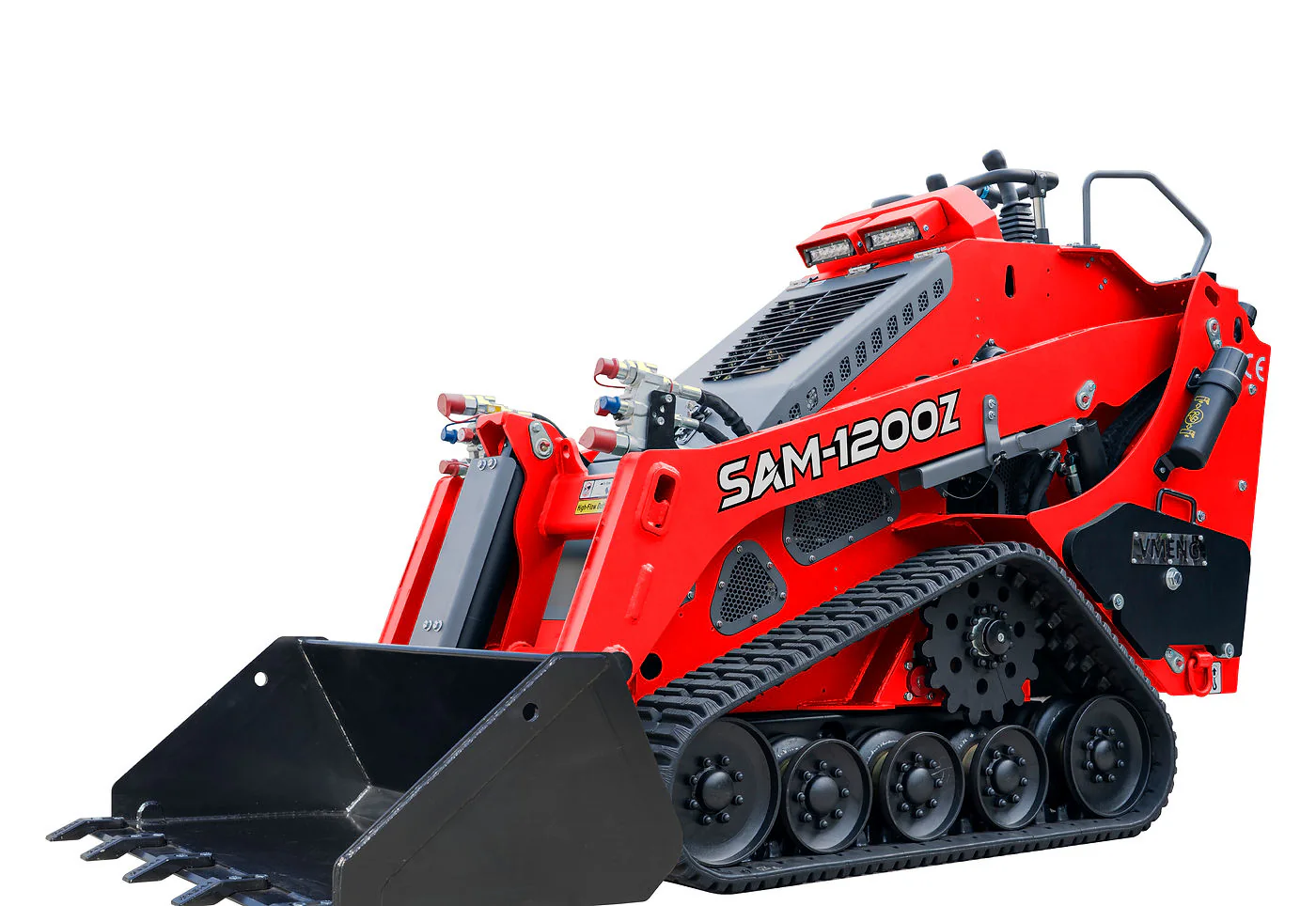
It reaches places larger loaders cannot.
Narrow models can pass through residential gates, work between buildings and operate on compact landscaping or farm sites.
I built this site because, when I began researching mini skid steers, I did not know where to start. The available information was scattered and often difficult to compare. Mini Skid Match is intended to make that first stage easier for other buyers.
Answer seven straightforward questions. We will show your strongest matches, explain why they fit and flag what still needs to be verified before you buy.
Ask about machines, attachments, importing, maintenance and repairs, or read existing discussions before you buy.
See machine-use videos, owner observations and what I continue to learn while operating Chinese mini skid steers.
These are Kirk's personal channels. They do not influence Mini Skid Match scores, eligibility or machine rankings.Mini Skid University explains lifting terms, hydraulics, attachments, importing, safety, maintenance and buying routes in 10 plain-English lessons.
When I began looking for a mini skid steer, I had no idea where to start. I began with a Google search and found that useful information was scattered across manufacturer pages, dealer listings, videos and owner discussions. I built Mini Skid Match to make that first research journey easier for other people. It can help you understand what is available, identify machines that may suit your work and form better questions before speaking with a seller. It does not tell you what to buy, and every important detail still needs to be confirmed for the exact machine.
Specifications, prices, availability and dealer support can change. Check each machine’s last-reviewed date, review the cited sources and obtain a written, serial-specific quote before buying.
How information is checkedOpen the buyer guideUse Mini Skid University for plain-English lessons, then open the buyer tools for attachments, costs, safety, dealer support and evidence.
Follow the four steps below to define the job, access, load, attachment, transport and budget. Open the learning guides and buyer tools whenever you need more explanation.
Work through 10 plain-English lessons covering machine basics, access, lifting, hydraulics, attachments, safety, transport, maintenance, importing and support. Then use what you learned in the matcher.
Expanded lessons covering the full buying journey take you from “what is this machine?” to a complete brief you can use in the matcher. Use the lesson buttons or work through with Next.
A mini skid steer is a compact, self-propelled hydraulic tool carrier. You stand on a rear platform or walk behind it, steer by varying the tracks or wheels, and swap the front attachment to change jobs.
Narrow models can pass through residential gates, work between buildings and operate on compact landscaping or farm sites.
A bucket, forks, auger, trencher, grapple or mower can turn the same carrier into a different tool in minutes-when the mount and hydraulics truly match.
Instead of shovelling, wheelbarrowing and manually positioning materials, the operator can carry, place and clean up from one compact platform.
Width, machine mass, rated operating capacity, load centre, attachment weight, hydraulic cooling, ground and operator training all determine whether it is suitable.
The logo is one of the least important decisions. Width, safe working capacity, hydraulic output, attachment mount, local support and the weight of the complete transport package matter more.
Tracks usually give better traction and flotation on soft ground. Wheels are simpler, faster on firm surfaces and can cost less to maintain.
Plain English: match the undercarriage to where you actually turn.Manufacturer ROC remains the preferred comparison for travelling with a load. When a company publishes only rated/maximum lift, Mini Skid Match shows a clearly labelled Provisional ROC estimate until proper ROC documentation is supplied. Brief low lifting uses the separate Conservative Lift Comparison. Neither estimate is a safe working load.
Ask for tipping load, ROC method, load centre, lift height and fitted attachment.Horsepower moves the machine, but continuous auxiliary flow, pressure, cooling and case drain decide whether a trencher, mower or stump grinder works properly.
“High flow” needs a number in L/min at a stated pressure.A 1,040 mm body will not fit a 1,000 mm gate. Measure the tightest opening, then include the bucket, tracks, hoses and safe clearance.
The finder penalises any machine wider than your answer.Most attachments fall into two broad plate families: the compact CII pattern, often called Toro Dingo-style, and the larger Bobcat or skid-steer quick-attach pattern. They are not interchangeable.
Choose the same basic plate family, then verify the drawing, latch, pins and a physical lock-up because manufacturers can vary the geometry.Direct import can be cheaper, but you become the importer, pre-delivery inspector, parts planner and warranty coordinator. Dealer pricing pays for some of that risk.
Compare landed-and-ready cost, not the headline factory listing.A mini skid steer is compact, powerful mobile plant. Its centre of gravity changes rapidly as the arms rise, the load moves forward or the machine crosses uneven ground. No website can approve a slope, lift or attachment for a particular site - the operator manual, training and a site-specific risk assessment still control the work.
Keep the load close to the ground, make gentle turns and raise only when positioned to place or dump. A machine that can lift an object once may not be stable enough to travel with it raised.
There is no universal safe slope angle. Follow the exact manual, avoid side-slope travel, inspect edges and hidden voids, and reduce the load. Wet grass, loose gravel and a heavy forward attachment change the risk.
Clean the plate, inspect wear, fully engage both locking pins and visually confirm they pass through the lower retaining holes. Then perform a low, ground-level curl and dump test before lifting.
The mechanical pins hold the attachment to the plate. Hydraulic quick couplers carry oil. Both must be connected correctly, but checking hoses never proves that the attachment itself is locked.
Start with safety footwear, close-fitting workwear and impact-rated eye protection. Add hearing protection around the carrier and powered tools. For brush cutters, mulchers and other debris tools, use a full face shield over safety glasses or goggles. Add gloves for handling sharp or hot parts, high-visibility clothing, a hard hat or suitable respiratory protection when the site assessment requires them. Keep gloves, clothing, hair and jewellery away from rotating parts.
Keep bystanders and passengers away. Lower the attachment, isolate power, release stored pressure and wait for every moving part to stop before clearing a blockage or approaching the tool.
Open any chapter when you want more depth. Together they cover the machine, the language sellers use, attachments, auxiliary hydraulics, safety, transport, maintenance and buying routes.
Carrier means the machine itself. Attachment means the bucket, forks, auger or powered tool fitted to the front. Operating mass is the working weight under the manufacturer’s stated conditions. ROC, or rated operating capacity, is a controlled load rating. It is not the same as tipping load, breakout force or a seller’s maximum-lift claim.
Load centre describes how far the load sits in front of the attachment. Hinge-pin height is the height of the bucket pivot at full lift. Dump height is the clearance under the bucket edge when dumping. Reach is how far forward the machine can place a load. Each term answers a different question, so never compare one with another.
The engine or electric motor powers hydraulic pumps. Separate hydraulic functions drive the tracks or wheels, raise the loader arms, tilt the attachment plate and power auxiliary implements. Travel controls vary the speed on each side to steer. Loader controls raise, lower, curl and dump.
Before operating, identify neutral, throttle, parking brake, operator-presence system, auxiliary control, float function, emergency lowering and the lift-arm support. Control layouts differ. Ask for a proper demonstration, read the manual and practise unloaded on a level, isolated area.
Auxiliary hydraulics, often shortened to aux hydraulics and sometimes heard as “ox hydraulics,” are the hydraulic oil supply and return connections at the front of the machine. The engine turns a pump, the pump moves pressurised oil through hoses and couplers, and that oil powers a motor or cylinder on the attachment.
Aux hydraulics run augers, trenchers, sweepers, stump grinders, mowers, mulchers, snow blowers, tillers and other powered tools. They also open and close cylinders on grapples, 4-in-1 buckets, log splitters and similar attachments. A plain bucket or pallet forks normally use the loader arms and tilt circuit rather than their own auxiliary connection.
Flow, measured in L/min or gpm, mainly affects how quickly a hydraulic motor can turn. Pressure, measured in bar or psi, contributes to torque or cylinder force. “Low flow” and “high flow” are relative terms, not universal numbers. A seller must state the actual continuous flow and pressure available at the front couplers.
Low or controlled flow suits cylinder movements and attachments that need gentle positioning, such as opening a grapple. Standard flow commonly powers augers and trenchers. High-flow circuits are useful for demanding continuous tools such as forestry mulchers, heavy brush cutters, snow blowers and some stump grinders. Some machines advertise only one full-flow auxiliary circuit and call it high flow. That does not prove it can safely run low-flow tools: ask whether the flow is adjustable, proportional or supported by a separate low-flow circuit.
A powered attachment may work for five minutes and still overheat during an hour of cutting. Continuous-duty suitability depends on the oil cooler, reservoir, pump, hose size and the amount of engine power available after traction and loader demands. Ask for hot continuous flow, not only a cold-idle or total-pump figure.
A case drain is a separate low-pressure hose that lets internal leakage oil return safely from some hydraulic motors. Excess return back-pressure can damage seals. The pressure and return couplers must also match the attachment’s direction, size and fitting standard. Never plug an unknown tool in only because the connectors appear to fit.
Many modern mini skid steers have two separate auxiliary hydraulic circuits at the front:
The two circuits usually have their own sets of couplers (sometimes one pair on each side of the loader arms, or clearly labelled high/low). Using the high-flow circuit for a low-flow tool can make the attachment violent or overspeed the motor; using the low-flow circuit for a high-demand tool will make it weak and overheat the oil.
Always ask the manufacturer or dealer which circuit is which, whether the low-flow is proportional or only momentary, and which coupler pair to use for each attachment.
The two main plate families in this guide are compact CII / Toro Dingo-style and Bobcat / skid-steer quick attach. They are not interchangeable. Even within a family, latch geometry, pin spacing and hose routing can vary, so compare dimensioned drawings and physically test the lock-up.
Before every use, clean the plate and lower pin areas, inspect bent or worn parts, fully engage both locking pins and visually confirm the pins pass through the attachment's lower retaining holes. Keep the tool low and perform a gentle ground-level curl and dump test. Recheck after the first movements. The correct term is that the pins are fully seated or engaged, not sealed.
A proper match includes plate, attachment weight, hydraulic flow, pressure, case drain, couplers, hose length, return limit, cooling capacity and written carrier approval. An adapter plate adds weight and moves the load farther forward, reducing effective lift and stability. Mechanical lock pins and hydraulic quick couplers are separate checks.
The matcher asks one direct question: the heaviest load you want the machine to lift. It then compares that answer with an Estimated Conservative Lift Comparison (CLC). The CLC is the site's common research comparison because manufacturers publish lifting information using different terms and test methods. A plain-language explanation button appears with the question.
The CLC uses 65% of published tipping load; 65% of tipping load derived from a stated ROC percentage; or an assumed 50% ROC basis when the percentage is not stated. A published rated load, operating load, working load, load capacity or non-maximum lift capacity is retained provisionally without a second percentage reduction. An explicit maximum-lift claim uses 90% when documented test conditions are published or 80% when the test basis is not stated, rounded down to the nearest 50 kg. Where more than one valid basis is available, the lowest is used.
Manufacturer ROC remains visible as supporting reference data. When a company publishes only a maximum-lift claim, the site may also show a clearly labelled Provisional ROC estimate: 90% when documented test conditions are stated or 80% when the test basis is unstated, followed by 35% for a tracked, convertible or unknown undercarriage or 50% for a wheeled machine, rounded down to the nearest 25 kg. Breakout force, hydraulic force and lifting-force-only claims are not converted unless a separate conservative load figure exists.
Verification required: every CLC and Provisional ROC figure is an estimate, not a manufacturer-rated capacity, guaranteed maximum, safe working load, load chart or permission to lift. Actual capability changes with attachment weight, load position, lift height, reach, configuration, ground and operating conditions. The user must confirm the exact machine's limits with the manufacturer or authorized dealer and follow its operating manual and safety instructions.
Tracks generally spread weight over a larger area and improve traction on soft or uneven ground. Wheels may be simpler, faster and cheaper to maintain on firm surfaces. Both steer by skidding, so both can tear turf, disturb gravel or mark finished floors when turning sharply.
Ground pressure is useful only when calculated for the actual machine and track configuration. Mud, hidden voids, edges, trenches, retaining walls and slopes can remove support from one side very quickly. A questionnaire cannot approve a slope or replace a site assessment.
Transport starts with the complete ready-to-travel package, not the brochure machine weight. Add the bucket, fuel, operator platform, counterweights, spare attachments, mud, chains, ramps and any toolboxes. Then add the trailer’s own tare mass and compare the total with trailer payload, tow-vehicle limits, coupling rating, axle limits and local licence or brake rules.
Check the machine’s widest and highest transport configuration and its centre of gravity. One attachment may push the combination over a legal mass or create poor weight distribution even when the machine alone appears suitable. Obtain actual scale weights whenever possible.
Use a level, firm loading area and ramps rated for the machine, long enough to control the break-over angle and secured so they cannot separate. Keep people clear, travel slowly and follow the manufacturer’s specified travel direction. Raised attachments and sudden steering make a ramp more hazardous.
Lower the attachment, shut down, apply the parking brake and use rated chains or straps at the manufacturer’s tie-down points. Restrain loose attachments separately. Recheck tension after the first part of the journey and follow the transport rules for the country and vehicle combination.
Before work, walk around the machine. Look for oil, fuel or coolant leaks; damaged hoses; loose fittings; track or tyre damage; missing fasteners; cracked welds; worn pins; blocked cooling screens and anything caught around rollers or moving parts. Test the parking brake, operator-presence system and attachment latch.
Check fluid levels using the manual and correct fluid specification. Grease the listed points, keep couplers clean and inspect the attachment before connection. Small compact machines work in dust and debris, so a blocked cooling pack or loose hose can quickly become an expensive failure.
Service intervals can include engine oil, fuel and air filters, hydraulic filters, hydraulic oil, coolant, track tension, drive chains, belts, pins and bushings. The hour meter and calendar both matter. Record every service and never mix hydraulic fluids without confirmation.
Before buying, obtain the operator, service and parts manuals plus part numbers for filters, seals, hoses, couplers, tracks, rollers, sprockets, pumps, motors and valves. Direct-import buyers should hold sensible first-service and downtime spares. A cheap machine that waits months for a basic part is not cheap in commercial use.
Petrol can suit occasional work and lower purchase budgets. Diesel is common for longer commercial duty and low-speed torque. Electric can reduce local exhaust and noise for indoor or sensitive sites, but battery capacity, loaded runtime, charging supply, battery warranty and replacement cost must be known.
Fuel type does not prove quality or duty rating. Check engine identity, cooling, emissions acceptance, local service and the exact regional configuration. Indoor work still requires a plan for ventilation, dust, battery charging and pedestrian separation.
A dealer purchase may add commissioning, training, parts stock, warranty administration, finance and resale support. Direct importing can lower the purchase line but transfers customs, pre-delivery inspection, setup, parts planning and warranty coordination to the buyer. Used equipment can provide established support at a lower price, but condition controls the value.
Compare ready-to-work totals rather than advertisements. For used machines, inspect a cold start, hot hydraulic operation, leaks, pins, track wear, safety functions and service history. In every route, identify the legal warranty provider and written exclusions before paying a deposit.
EXW generally starts at the seller's premises. FOB generally includes delivery and export loading to the named port. CFR and CIF generally include ocean transport to the named destination port, with CIF also including specified insurance. DAP generally brings the shipment to a named destination while the buyer handles import clearance and taxes. DDP means Delivered Duty Paid: the seller takes the broadest delivery responsibility under the named Incoterm, but the quote must still state the exact destination, unloading, registration, local tax and excluded service items.
Also learn bill of lading, customs broker, HS code, demurrage, PDI or pre-delivery inspection, landed cost and last-mile delivery. Never rely on a shipping acronym by itself. Put the named place, Incoterms edition, packing list, container treatment, port charges, tax responsibility and delivery method in the written order.
Ask for a serial-specific dimensioned sheet, operating mass definition, tipping load, ROC method, load centre, attachment configuration, hot auxiliary flow, pressure, case drain, manuals, safety features and written warranty responsibilities. “Same as,” “universal” and a maximum-force claim are not sufficient proof.
Delivery day is for inspection and familiarisation, not maximum production. Read the manual, complete training, verify fluids and fasteners, test safety interlocks and attachment lock-up, then try travel, lift, tilt and auxiliary functions at low speed in an isolated level area.
Engine emissions rules vary by market and can block a machine at the border or restrict where it may be used. Common regimes include US EPA Tier 4 Final, EU Stage V, and Australian standards that often reference similar technology. Many Chinese mini loaders use engines that are accepted in some markets and not others.
Always obtain the exact engine family, emissions certificate or declaration of conformity for the destination country before ordering. Electric models avoid exhaust rules but introduce battery transport, charging infrastructure and end-of-life considerations. Never assume a factory "export" configuration meets local rules.
Tracks, rollers, sprockets, hydraulic seals, hoses, couplers and pins are the usual consumables. Dusty or muddy work accelerates wear. Continuous high-flow attachments generate heat that shortens oil and seal life if cooling is marginal.
Budget for a first-year parts and service reserve of 8-15% of machine price for direct-import units, lower for well-supported dealer machines. Keep a basic kit of filters, seals, grease fittings and track hardware. Record hours and services; a machine without history loses resale value quickly.
Cold-start the engine, listen for unusual noises, check for leaks under load and after heat-soak. Measure track tension and wear, inspect rollers and idlers, test all hydraulic functions hot, verify operator-presence and parking systems, and confirm attachment lock-up with a known implement.
Request service records, serial-number photos of the engine plate and frame, and a written statement of any known issues. For imports, also verify that the delivered configuration matches the ordered bill of materials.
Established dealer brands generally hold value better because of parts availability, warranty transfer and buyer confidence. Direct-import machines depreciate faster unless they have documented maintenance and a clear support route in the secondary market.
Total cost of ownership includes purchase, freight, compliance, attachments, trailer, fuel, maintenance, downtime, and eventual resale. A cheaper machine that sits waiting for parts or fails early is rarely the lowest-cost option.
Confirm operator-presence (tether or seat switch), parking lock, emergency lowering, hose guards, mechanical lift-arm support and clear load charts. Local workplace health and safety rules still apply even if the machine itself has no formal licence requirement.
Provide or obtain operator training, a safe work method statement for the tasks, and exclusion zones. Never treat a mini skid as a personnel lift or crane.
Quick Match starts with the job, access, heaviest required lift, planned attachments, simultaneous-function needs, transport limit and budget. Detailed Match keeps all 22 questions for buyers who want to refine technical, ownership, warranty and support preferences.
Use this option set when local parts, trained service, documented warranty administration and resale support matter. Each machine is ranked against the same access, capacity, hydraulic, transport and budget answers as the Chinese-brand candidates.
Headline width, lift and flow are only the first comparison. The real value test includes safety architecture, attachment compatibility, hot-duty performance, parts response, technician access, warranty administration and resale. If a model search finds no credible owner report, treat that absence as a research gap-never as positive feedback. Planning prices exclude attachments, tax, freight and local deal costs unless the linked seller states otherwise.
Select any model to see how ready its public evidence is for a serious buying decision. A high documentation score is not a durability verdict; it means fewer critical fields are missing or ambiguously worded.
The attachment often decides how much hydraulic flow, lifting margin, cooling and mounting compatibility you really need. These cards show practical flow guides, planning costs, public manufacturer availability and safe-use research links.
21 implement guidesThe front auxiliary couplers send pressurised oil to a motor or cylinder on the attachment. Flow, measured in L/min or gpm, largely controls speed. Pressure, measured in bar or psi, contributes to force or torque. A plate that physically locks on does not prove that the hydraulic motor, hoses or return circuit are compatible.
Some machines provide a constant-flow circuit for augers, trenchers and other continuously powered tools plus a separate lower-flow or momentary circuit for controlled movements such as opening a grapple. Others provide one adjustable circuit. Always verify the exact machine, not just the badge.
Read Vermeer's dual-auxiliary explanation ↗Grapple jaws, hydraulic rotation, post drivers and small motors may require a lower specified flow. Feeding too much oil can make control abrupt, overspeed a motor, create heat or damage seals. A low-flow circuit is a capability, not a weakness.
Trenchers, forestry mulchers, brush cutters, snow blowers and Harley rakes consume power continuously. They need flow and pressure inside the attachment maker's range, sufficient engine power, hydraulic cooling and sometimes a case-drain line.
Search by name or brand. More filters are available if you need them.
Search Chinese, budget and established dealer machines together. Incomplete variants remain visible for research, but missing specifications cannot satisfy a numeric filter or qualify as an automatic match.
Research sources ↗Sorting applies inside each collapsing manufacturer group. Blank or unpublished values move to the end.
Implement filters identify hydraulic-flow planning candidates only. They do not prove that the manufacturer approves a particular attachment. Confirm plate family and dimensions, couplers, pressure, case drain, cooling, attachment mass and written carrier approval.
Choose a machine and buying route, then replace every planning allowance with a written local quote. The calculator includes the costs most often missing from a factory or marketplace headline.
Select your market to see an official starting point, then verify the exact machine, engine, buying route, workplace and transport rules before ordering.
Official links are a starting point, not a complete compliance decision for a particular machine.
Demand a serial-specific build sheet with engine make, engine family, machine mass, overall width, tyre or track option, attachment plate drawing, controls, safety equipment and a list of everything included in the crate.
Ask for tipping load, rated operating capacity, test standard, load centre, lift position, attachment and counterweight condition. Never compare an unsupported maximum-force claim directly with a standards-stated ROC.
Confirm measured hot flow at the front couplers, working pressure, return back-pressure, case drain, cooling, couplers and plate geometry. A high-flow label does not prove that a mulcher or planer will run safely.
Check customs classification, duty, GST or VAT, broker fees, port charges, quarantine or cleanliness, engine emissions, machinery conformity, inspection, inland freight, pre-delivery work and a realistic risk reserve.
Use the real machine, fuel, bucket, attachments and spare-parts mass. Confirm trailer, tow vehicle, axle, restraint and road rules, then document guarding, interlocks, training, maintenance and the safe work method for each task.
Get the legal seller or importer, warranty administrator, term, hour limit, exclusions, parts stock, technical response, labour, travel, international freight and failed-part return process in writing before paying a deposit.
Choose a brand and market to see current named dealers, evidence-checked sellers, factory-direct contacts and official dealer locators. A city, postcode or ZIP code is optional and is used only to prepare a map search. Current named routes include Digzilla Machinery in Australia and Nick's Loader Sales in the United States. Other sellers are labelled separately when manufacturer authorization has not been confirmed. Mini Skid Match does not store your location.
Start with a brand and market. Add a location only when you want a nearby map search.
Ask about a machine, request help with a shortlist, report incorrect catalogue information or enquire about dealer and manufacturer participation. We will use the details only to respond to this request.
You can also email contact@miniskidmatch.com.
Mini Skid Match is independent buyer research. Manufacturers, dealers and affiliate links do not automatically influence rankings. Eligibility and fit are based on the buyer’s answers and the evidence attached to each machine record.
There is no automatic paid placement. Every eligible machine is assessed against the same job, access, capability, ownership and evidence rules.
Exact-model manufacturer documents come first, followed by regional dealer information and carefully labelled owner signals. Conflicting claims remain visible.
The original 112-record critical-specification audit was bulk-reviewed on 29 July 2026. New provisional records show their own later research date, and approved database corrections may be newer.
Visit the Mini Skid Match Community for practical buying questions, owner reports, attachment discussions, maintenance help and safety conversations. Treat every report as a research signal rather than a verified specification.
The ledger separates recurring positives, reported concerns and source strength. Public forums come first; Facebook groups and Reddit are optional and clearly labelled.
Verify these points with a serial-number-specific data sheet, a witnessed test and a service partner in your own region before money changes hands.
Confirm operator-presence or tether systems, parking lock, emergency lowering, hose protection, lift-arm support, guarding, a usable manual and safe working-load marking.
Request tipping load, rated operating capacity, test standard, load centre, attachment and counterweight condition.
Ask for measured hot auxiliary flow and pressure, plus case-drain, return-pressure and cooling limits.
Get a dimensioned plate drawing, pin spacing, coupler type, hose size and a photo of the exact configuration.
Clarify warranty labour, diagnosis, freight, consumables, travel, failed-part return and stocked parts before the sale.
Include freight, insurance, customs, tax, compliance, port charges, unloading, PDI, service, attachments and spares.
Plain-English answers to common buyer questions and technical terms. Expand only the card you need.
ROC is the rated operating capacity - a conservative working-load figure when it is published with a recognised test method. Tipping load is the load at which the machine begins to lose stability in the stated test configuration. Hydraulic flow is how much oil reaches a powered attachment each minute; pressure and cooling matter as well. Operating weight is the machine's ready-to-work mass, which affects transport and ground pressure.
Requirements depend on the country, state, workplace and job. Even where no machine-specific licence is required, employers and operators can still have duties covering competency, safe plant, training, insurance and a safe system of work. Check the local regulator and insurer.
No. Petrol can be simpler and cheaper for occasional work. Diesel usually suits longer duty cycles, better low-speed torque and commercial use. Engine availability, emissions certification, cooling and local parts matter more than fuel alone.
Not from that claim alone. Fork load centre, lift height, attachment mass, counterweight, tipping load and verified ROC all reduce what can be handled safely. Ask for a load chart or witnessed test in the exact configuration.
Start by identifying the broad family: compact CII / Toro Dingo-style or Bobcat / skid-steer quick attach. They are not interchangeable. Manufacturers can still vary the latch, pins and geometry inside a family, so compare dimensioned drawings and perform a physical lock-up test before ordering.
A sensible starter pack can include a complete filter kit, belts, hoses, seals, track hardware, grease fittings, service manual, wiring and hydraulic diagrams, plus the part numbers for pumps, motors, valves and undercarriage components. The exact list depends on model and support route.
Model names in this market are not always unique and visually similar machines can come from different brands or OEM relationships. Treat the brand, manufacturer legal entity, serial number, bill of materials and warranty route as separate facts.
The matcher separates job fit, access, stability, capability, ownership, warranty and evidence. Width, transport, electric-only and serious capacity conflicts are treated as hard limits. Evidence does not add points to normal results. It becomes a scored preference only when you explicitly choose best documented specification. Eligible machines are ordered by visible fit score. When eligible machines have the same visible score and capacity status, verified specifications take precedence over provisional specifications. If the Derette XC1100 and V1000 remain tied after verification status, the XC1100 is shown first. Answer-fit detail, including closeness to a stated maximum width without exceeding it, then breaks further ties. As the final unresolved tie-break, current manufacturer documentation completeness is ordered VMENG, TOVISEN, Derette, then other manufacturers. This is not paid placement and can change as manufacturers provide better evidence. The leading result is always the strict highest match. The next two positions favour unused manufacturers only when score, capacity status and verification status are equal.